PropInspect
Rental Property Inspections: A Practical Guide for Landlords
A rental property inspection is a documented check of a rental's condition at set points in a tenancy: at move-in, periodically while the tenant lives there, at move-out, and between tenants. The routine inspections in the middle are the ones most landlords skip, and they're the ones that catch small problems before they become expensive.
Start a free inspection Create a free account
The four inspections in a tenancy
- Move-in: the baseline record before the tenant takes possession. See our move-in inspection guide.
- Routine, or periodic: a check during the lease, usually once or twice a year, focused on maintenance and safety.
- Move-out: the walkthrough after the tenant leaves, compared with the move-in record to settle the deposit. See the move-out inspection guide.
- Turnover: the make-ready check between tenants, listing everything to repair, clean, or replace before the next move-in.
This guide focuses on the routine inspection, because its goals and rules differ from the other three. Someone is living in the home, and you're mainly looking for maintenance problems, not deposit evidence.
How often to inspect
Once or twice a year suits most long-term rentals. A new tenant, an older building, or a property far from where you live are reasons to lean towards twice. Many landlords time one visit for autumn, before the heating season, and use it to change the furnace filter and test the alarms.
More often isn't better. Inspecting every month or two feels intrusive to a good tenant, and state and local laws often limit entry to reasonable times and purposes. Put the routine inspection schedule in the lease so it never comes as a surprise.
A drive-by look at the outside isn't an inspection and doesn't need entry, but it's a useful check between visits. An overgrown yard, piled-up trash, or a tarp on the roof all tell you something.
Notice and access
Most states require reasonable notice before a landlord enters an occupied rental for a non-emergency reason. Twenty-four hours is a common minimum, but some states and cities set a different period or require written notice. Check your state's landlord-tenant law and your lease, and give notice in writing, by text or email if your lease allows it, with a date and a time window.
Invite the tenant to be there. Most will come, and it turns the visit into a conversation: they mention that the bathroom fan is noisy or the back door sticks, which is exactly what you want to hear.
Be careful about what you photograph. You're documenting the property, not the tenant's life. Frame photos around fixtures, walls, and floors; keep personal papers, medication, and family photos out of shot; and don't open drawers or closets that only hold the tenant's things unless there's a fixture inside to check.
What to check during a routine inspection
Focus on the things that get worse when nobody looks: water, safety, and the building's systems.
Water and moisture
Look under every sink with a flashlight, at the base of each toilet, around the tub and shower, under the water heater, and at ceilings below bathrooms. Soft flooring, swollen cabinet bases, brown rings on a ceiling, and a musty smell are the early signs of a slow leak, which can cost thousands if it runs for a year.
Safety
Press-test every smoke and carbon monoxide alarm and check the date printed on each; most need replacing after about ten years. Look for blocked exits, windows painted shut, and loose stair rails. Note extension cords run under rugs and overloaded power strips.
Heating, cooling, and appliances
Check the furnace or air handler filter and replace it if it's dirty, and listen to the system run. Ask whether every burner and the oven work, and check the dryer vent for lint buildup, which is a fire risk.
Pests and the exterior
Look for droppings in cabinets and under sinks, gaps around pipes, and wasp nests under the eaves. Outside, check the gutters, downspouts that drain towards the foundation, any roof damage you can see from the ground, fences, and branches touching the roof.
Lease terms
Note signs of an unapproved pet, extra occupants, smoking, or alterations, but raise them with the tenant afterwards, calmly and in writing. An inspection isn't the place for a confrontation.
After the inspection: turn findings into a plan
Within a day or two, sort what you found into three groups: fix now (leaks and safety items), schedule (worn caulk, a sticking door), and record only (a scuffed wall within normal wear). Tell the tenant what you'll repair and when. The visit builds trust only if something comes of it.
Put it in a short written summary: thanks for having you, what you found, what you'll fix and by when, and anything you need from them, such as replacing a filter they agreed to change. A written summary keeps you both on the same page and gives you a record if the same issue comes back.
Keep each routine report with the property's other records. Over a few years they show how the property is aging, which helps you plan bigger work like a roof or a water heater, and they show a history of maintenance if a habitability complaint or an insurance claim ever comes up. Our landlord record-keeping guide covers what else to keep.
The turnover inspection between tenants
The turnover inspection comes after the move-out inspection has settled the deposit, and its reader is you. Walk the empty unit and list everything to do before the next tenant: repairs, paint touch-ups, deep cleaning, a new furnace filter, fresh alarm batteries, and new locks or a rekey. Price the list, schedule it, and check the work once it's done. That final check doubles as the next tenant's move-in record.
Rekey or change the locks between tenants. Some states require it, and it's good practice everywhere, because you can't know how many copies of the old keys exist.
Inspecting a rental you can't easily visit
If you live far from the rental, a routine inspection still matters, and probably matters more. A local property manager, a handyman you trust, or a friend can do it for you if you give them a written list of what to check and what to photograph, and ask for the report the same day.
Some landlords ask the tenant to take part: a guided video call, or a short list of photos to send, such as under the sinks, the water heater, the alarms, and the furnace filter. That catches leaks and dead alarms between visits, but it isn't a substitute for seeing the place yourself or through someone you trust. Aim to be there in person, or have your representative there, at move-in and move-out at least.
A simple seasonal routine
- Spring: gutters, drainage around the house, the air conditioning before the first hot week, and window screens
- Autumn: the furnace filter and a test run before the heating season, alarm tests, and outdoor taps in freezing climates
- Every visit: leaks under sinks, alarms, the water heater, and anything the tenant mentions
If you can only manage one visit a year, make it the autumn one. Heating failures, frozen pipes, and dead alarms cause the most expensive and most dangerous problems, and they're the easiest to prevent.
State-specific deposit guidance
Notice and entry rules come from state and local landlord-tenant law, while deposit rules come from each state's deposit statute. Our security deposit laws by state guides cover the deposit side, including which states require a written move-in record. For entry and notice, check your state's landlord-tenant statute.
Running routine inspections with PropInspect
Each property in PropInspect keeps its own list of rooms, so every routine visit walks the same rooms in the same order and the reports line up year after year. Tag findings Fix for the repair list and Info for things you only want on record, and add a clip of up to 60 seconds when a noise or a slow drain is easier to show than describe.
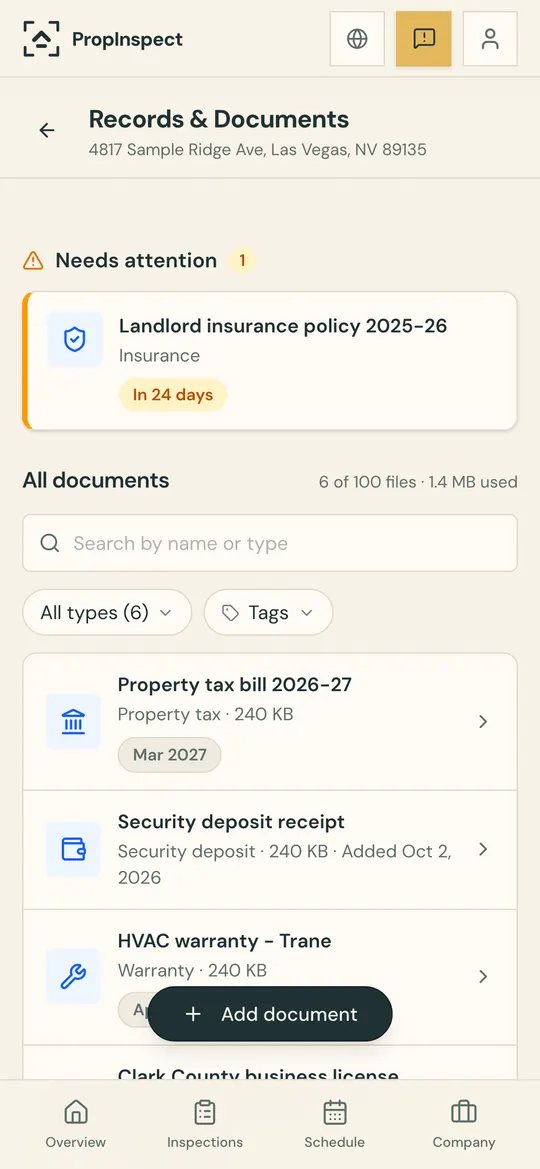
Each property also has a place for its documents: the lease, insurance, and permits. Anything with an expiry date is flagged in the app 30 days ahead, so a routine visit is a good moment to check what's coming up. Owners and tenants open the shared report without an account.
Frequently asked questions
How often should I inspect a rental property?
Most landlords inspect at move-in and move-out, plus a routine inspection once or twice a year with proper notice. Routine inspections catch maintenance problems early and confirm the property is being looked after.
Do I need to give notice before a rental inspection?
Usually yes. Most jurisdictions require reasonable advance notice (commonly 24–48 hours) before entering an occupied rental, except in emergencies. Check your local landlord-tenant laws for the exact requirement.
Can a tenant refuse a routine inspection?
Generally a tenant can't unreasonably refuse entry when you give proper notice for a legitimate purpose such as an inspection, but the details depend on your state's law and your lease. If a tenant objects, offer another time first; most refusals are about the timing, not the visit.
Can I manage inspections for multiple rentals?
Yes. Each property keeps its own room layout, inspection history, and documents, and every inspection costs the same $0.99 whether you own one rental or many.
Walk the unit. The report's already done.
Photos, video and notes land in the right room as you go. Share one link before you're back at the office: the repair person sees what to fix, the tenant sees why, the owner sees everything.
- Done at the door, not at your desk
- One link for everyone. No account, no app.
- Dated, room-by-room proof for when the deposit is due
First inspection free, then $0.99. No subscription.