PropInspect
Tenant Move-Out Checklist: Protect Your Security Deposit
A tenant move-out checklist is the list of cleaning, repairs, paperwork, and photos to finish before you hand back the keys, so the landlord has no grounds for unfair deductions. The photos matter most: they're your evidence of how you left the place.
Start a free inspection Create a free account
30 days or more before you move
- Give notice in writing, in the form and with the timing your lease requires, and keep a copy.
- Find your move-in record: the checklist, report, or photos from the start of the tenancy. If you don't have one, ask the landlord for a copy now.
- Read the lease for move-out terms: carpet cleaning clauses, rules about painting, how keys are returned, and how to give a forwarding address.
- Ask about an inspection before you leave. In some states, such as California, you can request one about two weeks before moving out, so the landlord points out problems while you can still fix them. Even where it isn't a legal right, many landlords will agree.
- Book movers, arrange for utilities to end the day after you leave, and schedule any repairs you'll need help with.
- Photograph the unit before you start packing, too. If movers scrape a wall or a floor, you'll want to know whether the mark was already there.
The week before: repairs you can and can't do
Fix the small things you caused, carefully: fill nail holes with spackle, replace dead bulbs, tighten loose handles, and replace a torn window screen. These cost little and are among the most common deductions.
Don't attempt repairs you can't do well. A badly patched wall in the wrong shade of paint can turn a few nail holes into a charge for repainting the whole room. If the lease says not to paint, don't.
If something breaks in the last few weeks, such as a dishwasher that stops working, report it to the landlord in writing straight away rather than leaving it to be found at move-out. A reported fault is a maintenance issue; an unreported one can look like damage.
Normal wear and tear isn't your responsibility. Faded paint, carpet worn along walkways, and grout loosened by age are things the landlord expects to deal with between tenants. You don't need to fix them, and generally they can't be deducted.
Cleaning checklist, room by room
The usual benchmark is the level of cleanliness when you moved in, not spotless. In practice, a thorough clean is the cheapest insurance you can buy. Work from top to bottom in each room, so dust falls on surfaces you haven't cleaned yet.
Kitchen
- The oven inside and out, including the racks and the broiler drawer
- The stovetop, drip pans, and range hood filter
- The fridge and freezer: emptied, defrosted if needed, wiped down, and left with the door ajar if the power will be off
- Cabinets and drawers, inside and out
- The sink, faucet, dishwasher filter, and counters
Bathrooms
- The toilet, including the base and behind it
- The tub, shower, tiles, and grout, with soap scum and mildew removed
- The sink, mirror, cabinet, and exhaust fan cover
Every room
- Floors swept, mopped, or vacuumed, including closets and corners
- Baseboards, light switches, and door frames wiped
- Windows, sills, and tracks cleaned; blinds dusted
- Ceiling fans and vents dusted
- Closets, shelves, and storage emptied
- Nothing left behind: trash, cleaning supplies, or anything in the garage or storage unit
Photograph the unit before you hand back the keys
Do this last, after the cleaning and after your belongings are out. Go room by room in the same order as the move-in record, if you have one, and match its angles where you can.
- Take a wide shot of each wall, then the floor, then close-ups of anything you want on record, especially damage that was already there when you moved in.
- Open the oven, fridge, dishwasher, and cabinets and photograph the inside. These are the most common cleaning charges.
- Record a slow video of each room, saying the room name and the date at the start.
- Photograph the keys and remotes you're returning, laid out together, and the final meter readings.
- Email the photos or a report link to your landlord the same day. Their inbox then holds a dated copy that nobody can say you made later.
Mail, utilities, and the last bills
Set up mail forwarding a couple of weeks ahead, so the deposit check and any itemized statement actually reach you. On your last day, photograph each meter and give the final readings to the utility companies for accounts in your name. End renters insurance the day after the lease ends, not before; you're still responsible for the unit until you hand back the keys.
On the last day
- Return every key, fob, and remote the way the lease says, and get a receipt or confirm it by email.
- Give your forwarding address in writing. In some states, when the deposit is due, or whether you can claim it, depends on it.
- Attend the move-out inspection if the landlord offers one. Walk round with them, note anything they point out, ask questions on the spot, and take your own photos as you go.
- Don't sign anything you disagree with. If you're asked to sign a move-out form, write your objections on it.
The most common deductions, and how to avoid them
- Cleaning: the oven, fridge, and bathroom are where most cleaning charges come from. Clean them last and photograph the inside of each.
- Carpet cleaning: check what your lease says. If it requires professional cleaning, keep the receipt.
- Nail and anchor holes: fill small ones neatly, and leave big repairs to the landlord rather than doing them badly.
- Keys and remotes: return every one and get it confirmed in writing; replacement fobs and lock changes add up fast.
- Things left behind: check the garage, storage unit, balcony, and the back of every closet.
- Unpaid utilities or bills: pay the final bills on accounts in your name and keep the receipts.
Getting your deposit back
Most states set a deadline for the landlord to return the deposit or send an itemized list of deductions, often somewhere between 14 and 60 days after you move out, and a few states set no single fixed deadline. Check the guide for your state and put the date in your calendar.
If deductions arrive, compare each line with your photos. If a charge is for something your move-in record shows was already there, or for normal wear, write to the landlord, attach the matching photos, and ask for the amount back by a specific date. Keep it short and factual.
A good dispute letter fits on one page. Include the rental's address, the date you moved out, your forwarding address, each deduction you dispute and why, the photos or report link that support you, and the amount you're asking for back and the date you want it by. Send it by email and keep a copy. Polite and specific works better than angry and general.
If that doesn't work, small claims court is designed for disputes of this size and usually doesn't need a lawyer. Several states add penalties when a landlord withholds a deposit in bad faith; Massachusetts, for example, allows up to three times the deposit for some violations. Your state's guide explains the rules and deadlines.
State-specific deposit guidance
Deposit rules belong to your state: how fast the landlord has to pay, what can be deducted, and what happens if they're late. Our security deposit laws by state guides set out each state's rules in plain English, with citations.
Documenting your move-out with PropInspect
PropInspect works for tenants too, with no account and no download for your first inspection. Type the address and the rooms are set up for you. In each room you take photos, record clips of up to 60 seconds, and add notes, including notes that point out damage that was already there when you moved in.
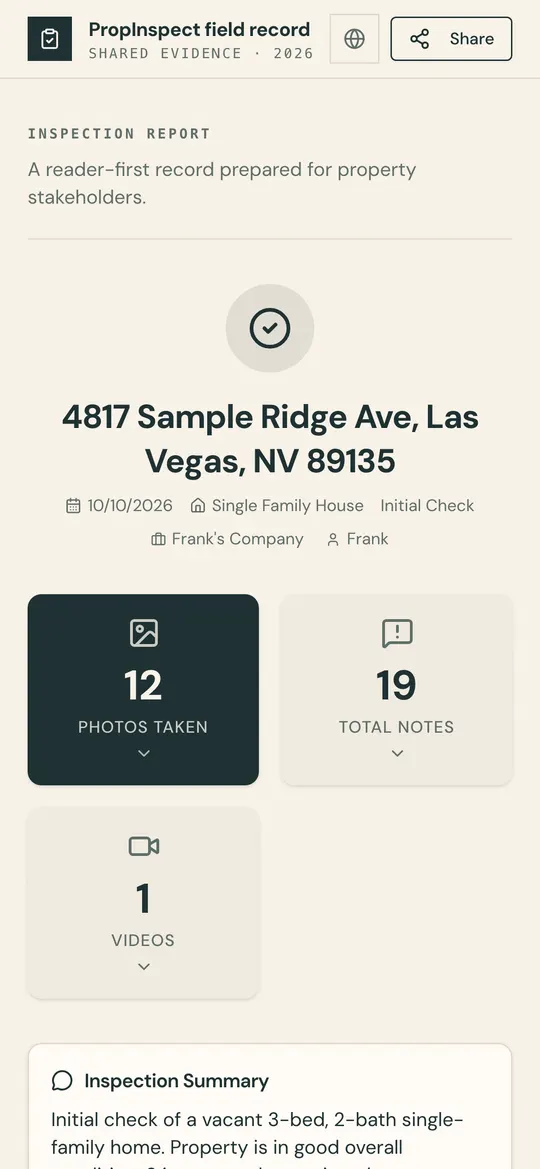
When you finish, you get one report for the whole unit. Send your landlord the read-only link, which opens without an account, or download the PDF and keep it with your lease.
Frequently asked questions
How do I protect my security deposit when moving out?
Clean thoroughly, fix any minor damage you're allowed to, and document the property's condition with dated photos and video before you return the keys. That record is your evidence if your landlord tries to deduct for damage or wear you didn't cause.
What's the difference between damage and normal wear and tear?
Normal wear and tear is the expected decline from everyday living — light carpet wear, small nail holes, faded paint — and landlords generally can't charge for it. Damage is beyond ordinary use, like large holes or stains. Photos help prove which is which.
What if I didn't do a move-in inspection?
You can still protect yourself at move-out. Photograph everything thoroughly, and gather anything else that shows the condition when you moved in: the original listing photos, emails or texts where you reported problems, and maintenance requests. In many states the landlord has to justify deductions, so missing move-in records can hurt the landlord as much as you.
Can I share my move-out record with my landlord?
Yes. PropInspect generates a read-only shareable link and PDF showing the photos, videos, and notes for every room, so you can send your landlord proof of condition right after your walkthrough.
Walk the unit. The report's already done.
Photos, video and notes land in the right room as you go. Share one link before you're back at the office: the repair person sees what to fix, the tenant sees why, the owner sees everything.
- Done at the door, not at your desk
- One link for everyone. No account, no app.
- Dated, room-by-room proof for when the deposit is due
First inspection free, then $0.99. No subscription.